San Fernando Valley, Tongva ground to Warner Center
The History of Woodland Hills
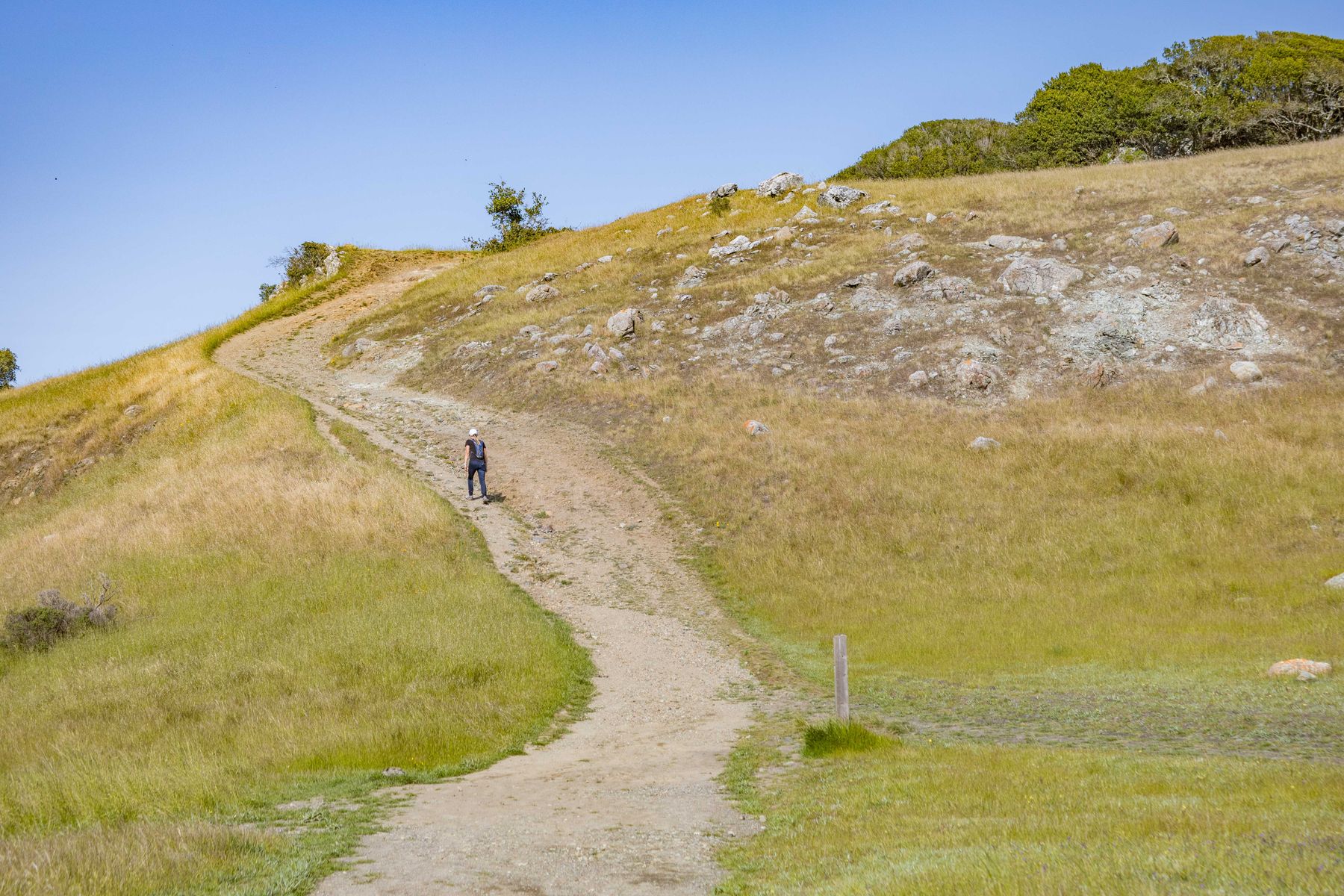
Woodland Hills began as Tongva ground and a Mexican-era rancho, was planted into being in 1922 by developer Victor Girard Kleinberger — who named it Girard and covered the hillsides in trees — and was renamed Woodland Hills in 1941 after his company failed. Postwar tract housing filled in the flats, and in the 1970s the old Warner Ranch became Warner Center, the dense office-and-retail core that still anchors the neighborhood today.
Quick facts
- Platted
- 1922, as "Girard"
- Developer Victor Girard Kleinberger bought roughly 2,886 acres of the old Rancho El Escorpión and El Valle de Santa Rosa and began subdividing it, planting tens of thousands of trees to sell the idea of a garden suburb.
- Renamed
- Woodland Hills, 1941
- After bankruptcy ended Girard's development company, residents and new owners renamed the community Woodland Hills, keeping the wooded, hilly image Girard had planted into the ground.
- The name
- Wooded hills, literally
- Unlike many Valley place names, this one is a plain description: the pepper trees, pines and eucalyptus Girard planted on the hillsides above Ventura Boulevard.
- What built it
- Citrus, then aerospace-era suburbia
- Early groves and ranch land gave way after World War II to tract housing, and the 1970s brought Warner Center, a planned high-rise office and retail core built on the old Warner Ranch.
- Annexed to LA
- Part of the City of Los Angeles
- Like most of the San Fernando Valley, Woodland Hills was annexed to Los Angeles in the early twentieth century to secure water from the Los Angeles Aqueduct.
- Today
- A Valley hub
- One of the largest and most affluent communities in the southwest San Fernando Valley, anchored by Warner Center, Westfield Topanga, and the Ventura Boulevard corridor.
Eras that made Woodland Hills
Before 1769
Tongva ground, not empty ground
Long before ranchos or freeways, the valley floor and surrounding hills were Tongva (Gabrieleño) territory, with village sites near reliable water sources across the San Fernando Valley. The hills above what is now Woodland Hills and Calabasas held seasonal camps and gathering grounds tied to oak groves and springs. Spanish missionaries out of Mission San Fernando Rey de España began pulling the valley into the mission economy in the 1790s, but the underlying geography — canyons draining toward the valley floor, oak-studded hillsides — was managed and used by Tongva communities for generations before that.
- Tongva (Gabrieleño) territory
- Oak-woodland and spring sites
- Mission San Fernando founded 1797
1845–1868
Rancho El Escorpión and Rancho El Valle de Santa Rosa
The land under today's Woodland Hills was split across Mexican-era ranchos, chiefly Rancho El Escorpión, granted in 1845 to three Native Californian grantees — Odón, Manuel and Urbano — one of the few grants in the region held by Indigenous rancheros, plus portions of the sprawling Rancho El Valle de Santa Rosa (later linked to the Calabasas area) and Rancho Ex-Mission San Fernando lands. These were cattle and grazing operations, not towns; American annexation of California in 1848 left the grants intact on paper but exposed them to decades of litigation, squatting and subdivision that eventually broke them apart.
- Rancho El Escorpión granted 1845
- Indigenous grantees Odón, Manuel, Urbano
- Cattle-and-grazing economy
1888–1920s
Ranch land before the boom
Through the late nineteenth and early twentieth centuries the hills and flatland southwest of the Valley stayed sparsely settled — dry-farmed grain, some citrus experiments, and large private holdings. The completion of the Los Angeles Aqueduct in 1913 changed the math for the whole San Fernando Valley: cheap, reliable water made subdivision profitable, and Los Angeles used the promise of aqueduct water to pull Valley communities into annexation. That set the stage for developers to start platting what had been ranch land into residential tracts.
- Los Angeles Aqueduct completed 1913
- Valley-wide annexation drive
- Ranch land held for subdivision
1922–1930s
Victor Girard plants a town called Girard
In 1922, developer Victor Girard Kleinberger assembled roughly 2,886 acres in the hills southwest of the Valley and began marketing an ambitious subdivision he named Girard, after himself. To sell the vision of a garden community, he planted an enormous number of trees — pepper trees, pines, eucalyptus and other ornamentals — along streets and hillsides that had almost none, effectively landscaping a future town before it had residents. Girard built a small commercial strip, sold lots aggressively through the boom years of the 1920s, and imagined a genteel hillside suburb well before the rest of the Valley urbanized. The Depression ended his company; the trees he planted kept growing regardless.
- Victor Girard Kleinberger, developer
- ~2,886 acres subdivided from 1922
- Mass tree-planting campaign
1930s–1941
Girard's company fails, and the town changes its name
Girard's development company went bankrupt in the 1930s, and the little commercial center he had built struggled through the Depression. In 1941, residents and successor developers renamed the community Woodland Hills, trading a developer's surname for a description of what his tree-planting had actually produced: a wooded, hilly landscape distinct from the flatter Valley communities around it. The rename stuck, and the name Girard survives locally mostly in a few street and place names.
- Girard company bankrupt, 1930s
- Renamed Woodland Hills, 1941
- Girard name persists in local references
1940s–1960s
Postwar tract housing and a country-club identity
Like much of the San Fernando Valley, Woodland Hills filled in rapidly after World War II with single-family tract housing built for a growing, car-owning, aerospace-and-manufacturing-driven Los Angeles workforce. Golf and country-club development — including El Caballero Country Club and the Woodland Hills Country Club — reinforced an upscale, low-density image for the area even as denser tracts filled the flats. Ventura Boulevard, the old road running the length of the southern Valley, became the area's commercial spine, lined with shops, restaurants and small businesses serving the new neighborhoods above and below it.
- Postwar tract-home construction
- El Caballero & Woodland Hills country clubs
- Ventura Boulevard as commercial spine
1970s–1980s
Warner Ranch becomes Warner Center
The single biggest change to Woodland Hills's built environment came on the old Warner Ranch, a large flat parcel that developers and the City of Los Angeles reimagined starting in the 1970s as Warner Center — a planned, high-rise office, retail and residential core meant to be a business-district anchor for the entire western San Fernando Valley. Office towers, corporate campuses and Topanga Plaza (the predecessor to today's Westfield Topanga) rose through the 1970s and 1980s, giving Woodland Hills a dense commercial center that most Valley communities never developed. Warner Center Park, with its open lawns, became the neighborhood's central gathering green.
- Warner Ranch redeveloped from 1970s
- Warner Center office/retail core
- Topanga Plaza opens, predecessor to Westfield Topanga
1990s–2010s
Retail reinvention and a growing food scene
Topanga Plaza was renovated and rebranded as Westfield Topanga, and in the 2010s the adjacent open-air The Village at Topanga was built out with modern retail, restaurants and residential components, cementing the Topanga Canyon Boulevard corridor as one of the Valley's major shopping destinations. Pierce College, with its working farm and long-running farmers market, remained a community anchor on the west side of the neighborhood. Ventura Boulevard's restaurant row kept evolving, and Woodland Hills built a reputation as one of the Valley's more walkable, amenity-rich communities.
- Westfield Topanga rebrand
- The Village at Topanga opens 2011
- Pierce College farm & farmers market
2020s–today
Warner Center keeps building, food halls arrive
Warner Center continues to redevelop with new mixed-use housing and public space, including ongoing work tied to the Warner Center 2035 Plan, while Topanga Social, a large food hall at Westfield Topanga, and other new dining and entertainment additions have kept the retail core current. Summer concerts at Warner Center Park, proximity to the Metro G Line busway, and an easy run up Topanga Canyon Boulevard to Malibu and the coast keep Woodland Hills positioned as a Valley community with unusually good access to both city amenities and open space.
- Warner Center 2035 redevelopment
- Topanga Social food hall
- Metro G Line busway access
Lost landmarks
Woodland Hills places that were real, mattered, and are gone — or gone as the thing they used to be.
The original Rancho El Escorpión grant
1845–late 1800s
Granted to Odón, Manuel and Urbano in 1845, this was one of the rare Mexican-era land grants held by Indigenous rancheros rather than Californio families. Decades of American-era litigation, debt and subdivision broke the grant apart long before Girard ever arrived. Nothing of the rancho survives as a working ranch, but the boundary lines it once described still echo faintly in property lines around the west San Fernando Valley.
Girard's original town center
1920s–1930s
Victor Girard's original commercial strip, built to give his subdivision a visible heart, did not survive as a distinct place once the company collapsed in the Depression and later development absorbed the area. The tree-planting campaign that surrounded it is the era's real surviving legacy, still visible in the mature trees found on some of the neighborhood's older streets.
The Warner Ranch as open ranchland
19th century–1970s
Before it became Warner Center, this large flat parcel functioned for decades as ranch and agricultural land on the valley floor. Its transformation into a dense office and retail core in the 1970s and 1980s erased almost all visible trace of that earlier rural use, aside from the name that still identifies the district today.
The original Topanga Plaza
1970s–1990s
The enclosed mall that anchored Warner Center's retail identity for its first two decades was substantially reimagined into what is now Westfield Topanga. Later, The Village at Topanga added an open-air complement next door. The site's role as the area's central shopping destination survived even as the buildings and format changed completely.
Still standing
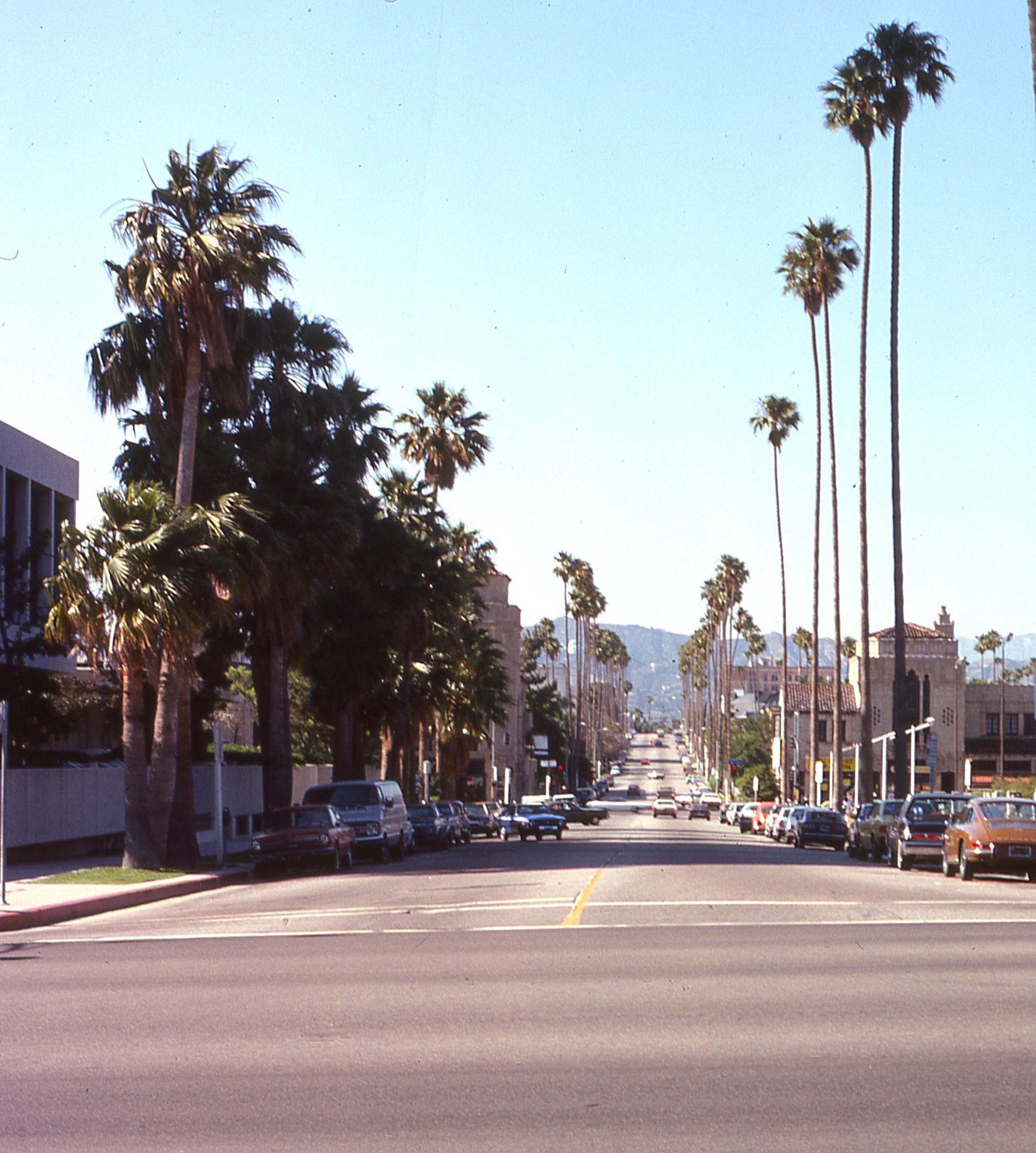
Woodland Hills is not a preservation showpiece — it has been rebuilt and reimagined at least three times, from rancho land to Girard's planted subdivision, to postwar suburb, to Warner Center's office core. What survives survives because it is still being used: a park that still hosts concerts, a college that still farms, a boulevard that still feeds people dinner.
Warner Center Park
opened with Warner Center's development
The green heart of Warner Center, with open lawns that host free summer concerts and community events. It remains the most visible reminder that Warner Center was planned as a complete district, not just office towers, and it is still the gathering space locals use for outdoor events today.
Pierce College and its farm
campus dates to 1947
A working agricultural campus on the west side of the area, Pierce College still runs a farm and a long-standing farmers market, giving Woodland Hills a direct, still-functioning tie to the agricultural land use that predated most of the neighborhood's suburban development.
Ventura Boulevard restaurant row
commercial corridor since early Valley development
The Boulevard has been Woodland Hills's commercial spine for generations, evolving in storefronts and tenants while remaining the area's primary walkable, mixed-use street. It is the best place to read the neighborhood's layered commercial history block by block.
El Caballero and Woodland Hills country clubs
established mid-20th century
These private clubs shaped the area's upscale, low-density postwar identity and continue to define the character of the neighborhoods around them, much as they did when postwar tract development first went in nearby.
Westfield Topanga and The Village at Topanga
mall era from the 1970s; Village added 2011
Together they form one of the San Fernando Valley's largest retail destinations, standing on ground that has been Woodland Hills's commercial anchor since Warner Center's original development. Topanga Social, a newer food hall addition, keeps the site evolving.
Top of Topanga Overlook
longstanding scenic turnout
Perched along Topanga Canyon Boulevard where it climbs toward Mulholland Drive, this overlook has long given locals and visitors sweeping views back down across the Valley — a reminder of the hillside terrain Victor Girard once tried to sell as scenery.
Notable figures in Woodland Hills history
Victor Girard Kleinberger
The developer who assembled and subdivided the land in 1922, planted the trees that gave the area its wooded character, and built the original town he named after himself. His company's bankruptcy in the 1930s led directly to the 1941 renaming to Woodland Hills.
Odón, Manuel and Urbano
The three Indigenous rancheros granted Rancho El Escorpión in 1845, one of the few Mexican-era land grants in California held by Native Californians rather than Californio elites. Their grant covered land that later became part of Woodland Hills and neighboring communities.
Walk it yourself
Start where Girard planted his trees: things to do in Woodland Hills
Warner Center Park, Westfield Topanga, and the parks that sit on former ranch land.
See how Warner Center split the neighborhood: area guides
Warner Center, Walnut Acres, Braemar and the Mulholland corridor, and what each era built there.
Read the longer local reporting: Woodland Hills eating guide
In-depth guides on eating, moving here and understanding how the neighborhood works day to day.